
https://ccds.ai/wp-content/uploads/2025/06/500227053_715589370984857_2720183648371422814_n.jpg424512Abu Hurairah Rifathttps://ccds.ai/wp-content/uploads/2025/05/final-logo-09-1-300x109-2.pngAbu Hurairah Rifat2025-07-28 22:20:102025-08-10 18:12:32Two papers accepted at the 2025 IEEE International Conference on Image Processing (ICIP 2025)
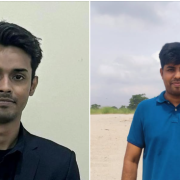
https://ccds.ai/wp-content/uploads/2025/06/Screenshot-2025-06-15-123952.png367739Abu Hurairah Rifathttps://ccds.ai/wp-content/uploads/2025/05/final-logo-09-1-300x109-2.pngAbu Hurairah Rifat2025-07-28 22:01:552025-08-10 18:12:32Two CCDS RAs (Jahir Sadik Monon and Rakibul Hasan Rajib) got US visa
From left to right: Dr Ashraful Islam (Assistant Prof), Asif Mahmud (Lecturer), Dr Md Rashedur Rahman (Assistant Prof), Dr Saadia Binte Alam (Associate Prof), Dr. Farhana Sarker (Associate Prof), Dr Ashraful Amin (Prof), Dr Amin Ahsan Ali (Prof), Dr AKM Mahbubur Rahman (Associate Prof), Sanzar Alam (Lecturer).
We welcome the new CSE faculty members joining CCDS. Here is a brief introduction:
Dr. Saadia Binte Alam’s research area of interest is medical image and signal processing and machine learning. She is the current Head of the department of CSE, IUB.
Dr Farhana Sarker recently joined IUB and her research involves Health informatics, Human Computer Interaction, Machine Learning. Dr Farhana Sarker is the recipient of several international grants, including one in 2024 from Bill and Melinda Gates Foundation.
Dr Md Rashedur Rahman recently joined IUB after completing his D.Engg degree from University of Hyogo, Japan in 2024. He works on medical image processing and analysis, video analysis, machine learning among others.
We are expecting to have faculty members from other disciplines joining CCDS.
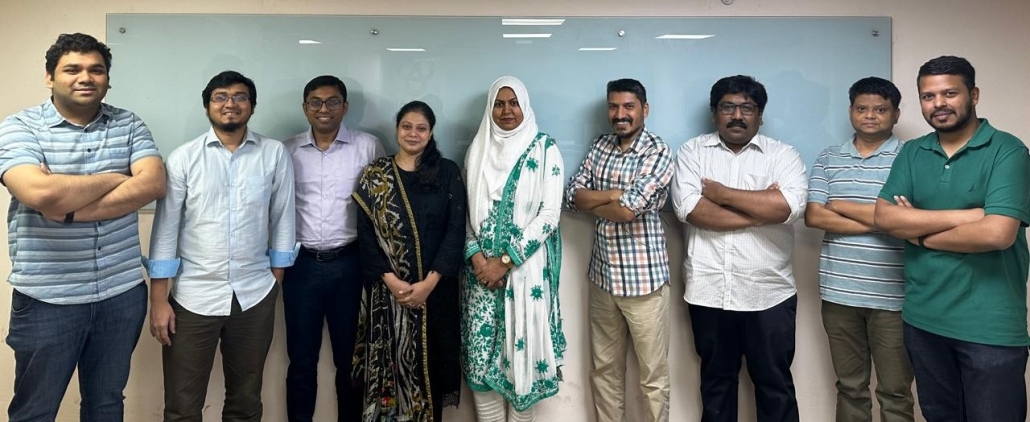
https://ccds.ai/wp-content/uploads/2025/07/487297818_673630788514049_6424296810912772183_n.jpg5241280Abu Hurairah Rifathttps://ccds.ai/wp-content/uploads/2025/05/final-logo-09-1-300x109-2.pngAbu Hurairah Rifat2025-07-28 20:41:282025-08-10 18:12:33Group photo of CSE, IUB faculty members who are part of CCDS
Our paper titled “Improving User Engagement and Learning Outcomes in LLM-Based Python Tutor: A Study of PACE” got accepted to CHI (the Top Ranked Conference on Human Factors in Computing Systems) 2025’s Late Breaking Work Track! What gives us more pleasure is that this work came out of an undergraduate senior project. The project done was by two IUB CSE graduates Ashfaq and Shochcho and was supervised by Prof Amin Ahsan Ali. Apart from them, other coauthors include CCDS RA Rohan and Dr Ashraful Islam, Hasnain Heickal, and Dr Akm Mahbubur Rahman, and Prof Ashraful Amin. This paper introduces PACE (Python AI Companion for Enhanced Engagement), a system leveraging Small LMs to deliver step-by-step guidance and adaptive feedback for teaching Python. This study examines (1) the PACE system’s effectiveness in programming education according to learners, (2) learners’ trust in PACE versus traditional resources, and (3) design recommendations to enhance engagement and learning outcomes. PACE contributes to advancing cost-effective, scalable programming education.
https://ccds.ai/wp-content/uploads/2025/07/Screenshot-2025-07-29-023912.png7001090Abu Hurairah Rifathttps://ccds.ai/wp-content/uploads/2025/05/final-logo-09-1-300x109-2.pngAbu Hurairah Rifat2025-07-28 20:39:482025-08-10 18:12:33Our paper got accepted to CHI (the Top Ranked Conference on Human Factors in Computing Systems) 2025’s Late Breaking Work Track!
This is the 2nd iteration of the workshop. This time we invited 28 graduates from IUB, NSU, BRAC U, UIU, MIST, IUT, AUST, Science University of Malaysia, DU, and BUET who had applied for a research intern position in CCDS. Together with them graduates and undergrads from IUB joined the workshop. Topics included hands on coding on CNNs, LSTMs, Transformers, as well as code management and visualization using VS code, PyTorch Lightening, and wandb.ai.
Dr. AKM Mahbubur Rahman with the research assistants conducted the workshop. Dr Ashraful Amin, Director of CCDS handed out the certificates.
We would like to specially thank our RAs – Fahim, Iftee, Moshiur, Sazzat, Monon, and Nabarun for helping us out preparing the materials, and helping Dr Mahbub in conducting the sessions. We plan to soon share the resources used in the workshop soon.
https://ccds.ai/wp-content/uploads/2025/07/481248473_658222566721538_8110864968781209685_n.jpg15352048Abu Hurairah Rifathttps://ccds.ai/wp-content/uploads/2025/05/final-logo-09-1-300x109-2.pngAbu Hurairah Rifat2025-07-28 20:30:062025-08-10 18:12:332nd CCDS Workshop on Deep Learning Code Management
This 3-day workshop will be open to all senior undergrad and graduate students, Researcher, and faculty members. The aim of this workshop is to encourage participants in interdisciplinary research. For more details see the flyer below
https://ccds.ai/wp-content/uploads/2025/07/Screenshot-2025-07-29-022501.png472760Abu Hurairah Rifathttps://ccds.ai/wp-content/uploads/2025/05/final-logo-09-1-300x109-2.pngAbu Hurairah Rifat2025-07-28 20:25:532025-08-10 18:12:33Announcement of the Interdisciplinary Computational Biology workshop 2025
They developed PACE a Python AI companion for Enhanced Engagement. For this work they generated synthetic data from GPT 3.5 turbo for scaffolding and conversion fine-tuning. The LORA fine tuned Gemma 2B model was used for making the system relatively lightweight. This trains the LLM model to breakdown complex problems into subproblems and generate hints and structured steps for the students. On the other hand the conversation data allows the LLM to engage with users using natural, human-like dialogue, to avoid hallucinations, to supports error correction and detailed feedback, and to enhances motivation and interest through interaction with users with different learning styles, and pace. Evaluation of the system was also performed.
A wider evaluation of the system is underway and we plan to make the version 2 of the system available to our intro to python programming students. Interaction datasets collected from students (with their consent of course) will be valuable for making such a system more reliable.
We hope to see more exciting work from Ibteda and Ashfaq in the near future.
https://ccds.ai/wp-content/uploads/2025/07/482071628_657693340107794_8570280266799986507_n.jpg1280960Abu Hurairah Rifathttps://ccds.ai/wp-content/uploads/2025/05/final-logo-09-1-300x109-2.pngAbu Hurairah Rifat2025-07-28 20:23:312025-08-10 18:12:34Congratulations to Muhtasim Ibteda and Ashfaq for completing their senior project.
The paper presents FabricSpotDefect dataset which is an annotated dataset for identifying spot defects in different fabric types.
Here is a short description of the paper:
The FabricSpotDefect dataset is, to the best of our knowledge, the first dataset specifically designed to accurately challenge computer vision in detecting fabric spots. There are a total of 1,014 raw images and manually annotated 3,288 different categories of spots. This dataset expands to 2,300 augmented images after applying six categories of augmentation techniques like flipping, rotating, shearing, saturation adjustment, brightness adjustment, and noise addition. We manually conducted annotations on original images to provide real-world essence rather than augmented images. Two versions are considered for augmented images, one is YOLOv8 resulting in 7,641 annotations and another one is COCO format resulting in 7,635 annotations. This dataset consists of various types of fabrics such as cotton, linen, silk, denim, patterned textiles, jacquard fabrics, and so on, and spots like stains, discolorations, oil marks, rust, blood marks, and so on. These kinds of spots are quite difficult to detect manually or using traditional methods. The images were snapped in home lights, using basic everyday clothes, and in normal conditions, making this FabricSpotDefect dataset established in real-world applications.
The figure below shows different spot samples with annotated bounding boxes and polygon annotation in red color 109 where (a) ink stain (b) paint spot (c) marker spot (d) makeup stain (e) rust stain (f) glue spot 110 (g)detergent stain (h) oil stain (i) coffee stain (j) food spot (k) blood spot, and (l) sweat stain.
link to download the dataset will be shared soon.
https://ccds.ai/wp-content/uploads/2025/07/481081666_657693276774467_6918765723561964024_n.jpg4751062Abu Hurairah Rifathttps://ccds.ai/wp-content/uploads/2025/05/final-logo-09-1-300x109-2.pngAbu Hurairah Rifat2025-07-28 20:20:192025-08-10 18:12:34Congratulations to Farzana Islam, Sumaya, Md. Fahad Monir, and Dr Ashraful Islam for getting their paper accepted in Data in Brief, Elsevier.
A paper titled “Capturing the spatiotemporal inequality in electricity consumption at the subnational level of Bangladesh using Nighttime Lights” has been accepted for publication in the Journal of the Asia Pacific Economy (SJR Q2, H-index 38, (Scopus) CiteScore 3.7 in 2023).
The research work was led by Dr Amin Masud Ali, Professor, Dept of Economics, JU and a co-director / supervisor of Data Science wing, CCDS. The paper is co-authored by Muntasir Wahed (then RA of DnDLab and Data Science wing, currently PhD student at UIUC), Dr Amin Ahsan Ali (Dept of CSE, IUB, and Director, AI & ML Wing, CCDS), and Dr Moinul I Zaber (Dept of CSE, DU and a collaborator of the Data Science wing, CCDS).
This paper examines the spatiotemporal inequality in electricity consumption at the subnational level (Zila and Upazila/Thana) of Bangladesh using nighttime light (NTL) data. The NTL data, sourced from the Visible Infrared Imaging Radiometer Suite (VIIRS) day/night band (DNB) for the period from 2013 to 2020, reveals persistent variability in electricity consumption among the districts. Notably, the gap between urban and non-urban areas has widened. While within district inequality (measured by NTL Gini) has declined over time, it remains high in several districts. Convergence analysis confirms that while lagging districts are showing a catching up effect, the sub-districts are diverging among themselves (in terms of mean NTL per capita). Interestingly, the rural sub-districts are converging among themselves despite urban sub-district divergence. The study also identifies regions with significant imbalance between NTL, population, and built-up area density values.
These findings have implications for policymakers aiming to ensure electricity for all and reduce inequality. First, these findings provide a clear picture of the NTL inequality pattern at the subnational level of the country. The findings should contribute to the process of ensuring electricity for all (SDG, Goal 7) producing and monitoring the evolution of inequalities within the country (SDG, Goal 10) to achieve the sustainable development goal of reducing inequalities. Secondly, this investigation also captures the inequality in regional economic development as NTL is a recognized proxy indicator of poverty, public service coverage, and economic activity.
https://ccds.ai/wp-content/uploads/2025/07/481664924_657687866775008_7530161650518040295_n.jpg705880Abu Hurairah Rifathttps://ccds.ai/wp-content/uploads/2025/05/final-logo-09-1-300x109-2.pngAbu Hurairah Rifat2025-07-28 20:18:192025-08-10 18:12:34A paper has been accepted for publication in the Journal of the Asia Pacific Economy