
Syed Tangim Pasha
- Collaborator, HCI Wing
Lecturer
Department of Computing and Information System
Daffodil International University
Published at
UbiComp
Research Interests
Health Informatics, Affective Computing, Digital Health, Wearable Computing
Jahanggir Hossain Setu, Syed Tangim Pasha, Ashraful Islam, Nabarun Halder, Asif Mahmud, M Ashraful Amin
2025 IEEE 23rd Student Conference on Research and Development (SCOReD)
IEEE, pp. 1-6
In the era of rapidly growing digital information, the classification of unstructured data from sources, e.g., Internet news articles, has become increasingly challenging. This study introduces the Turkish Retentive Network (TurkRetNet), a novel neural network architecture implemented to improve text classification tasks specifically for the Turkish language, a low-resource language with limited Natural Language Processing (NLP) resources. To address the common issue of class imbalance in real-world datasets, this study also implemented the KeNet data augmentation technique. The performance results showed that TurkRetNet considerably outperformed traditional models, e.g., Bidirectional Encoder Representations from Transformer for Turkish (BERTurk), and Convolutional BERT for Turkish (ConvBERTurk). The balanced dataset resulted in substantial improvements over the imbalanced dataset, with classification accuracy increasing by 6.06%, macro precision by 7.89%, macro recall by 9.52%, and macro F1-score by 8.86%. This research emphasises the efficacy of combining advanced neural architectures with effective data augmentation approaches that specifically target the distinct issues presented by low-resource languages. The combined application of TurkRetNet and KeNet set a new benchmark in Turkish text classification tasks. This study contributes to the advancement of NLP for under-resourced languages.
Lecturer
Department of Computing and Information System
Daffodil International University
Published at
UbiComp
Research Interests
Health Informatics, Affective Computing, Digital Health, Wearable Computing

Assistant Professor
Department of Computer Science and Engineering
Independent University, Bangladesh (IUB)Published at
CHI, UIST, UbiComp, IJCNN, ICIP, HCII, ICDMW, BLP, IEEE Internet of Things Journal, JMIR, JMIR Human Factors, JMIR Formative Research, IEEE Access, Smart Agricultural Technology, Diabetes Research and Clinical Practice, PLOS ONE
Research Interests
Human-Computer Interaction, AI for Social Good, AI for Public Health, AI for Impact

Published at
UbiComp, IJCNN, HCII, IEEE Access
Research Interests
Machine Learning, Deep Learning, Natural Language Processing, Health Informatics, Human-Computer Interaction

Lecturer
Department of Computer Science and Engineering
Independent University, Bangladesh
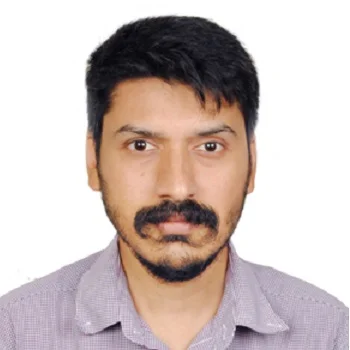
Professor
+1 more affiliationDepartment of Information Sciences and Technology
George Mason University, USA
Published at
ACL, CHI, UbiComp, ECAI, WACV, PAKDD, IJCNN, ICPR, ICIP, HCII, CLEF, BLP, Scientific Reports, JMIR, IEEE Access, Smart Agricultural Technology, Frontiers in Computational Neuroscience, Diabetes Research and Clinical Practice, PLOS ONE
Research Interests
Machine Learning, Cognitive & Vision Science, Cybernetics, Surveillance & Security, ICT in Education, Health, & Agriculture, Human-Computer Interaction, Internet of Things, Robotics