

Conference Paper2021Cited by 8

Identifying User Personas for Engagement with a COVID-19 Health Service Delivery Relational Agent

Ashraful Islam, Beenish Moalla Chaudhry

Proceedings of the 9th International Conference on Human-Agent Interaction

ACM, pp. 364–366

  • Good Health and Well-being — Relevance: 92%

Abstract

User personas play a crucial role in user-centered design (UCD) methodology-based technology development. In this way, appropriate user personas improve the design of interaction interfaces between a relational agent (RA) and its users, particularly when the RA is about delivering health services to the general population. This article discusses the approach for establishing patient personas to help in designing and developing interaction scenarios and dialogues between a health service RA and its target users during various COVID-19 stages. We employed a mixed-method research that was completed in two phases involving both healthcare professionals (HCPs) and individuals who have encountered COVID-19. Our approach resulted in the identification of three COVID-19 related user personas i.e., experiencing symptoms, COVID-19 positive with mild symptoms, and recovering from COVID-19.

Keywords

  • personas
  • health care delivery
  • relational agents
  • COVID-19 pandemic
  • interaction scenarios
  • healthcare workers
  • User-centered design
  • COVID-19 recovery
  • patient personas
  • dialogue design

CCDS Authors

Ashraful Islam, PhD
Ashraful Islam

Ashraful Islam, PhD

  • Center Director, CCDS
  • Director, HCI Wing

Assistant Professor

Department of Computer Science and Engineering

Independent University, Bangladesh (IUB)

Published at

CHI, UIST, UbiComp, IJCNN, ICIP, HCII, ICDMW, BLP, IEEE Internet of Things Journal, JMIR, JMIR Human Factors, JMIR Formative Research, IEEE Access, Smart Agricultural Technology, Diabetes Research and Clinical Practice, PLOS ONE

Research Interests

Human-Computer Interaction, AI for Social Good, AI for Public Health, AI for Impact
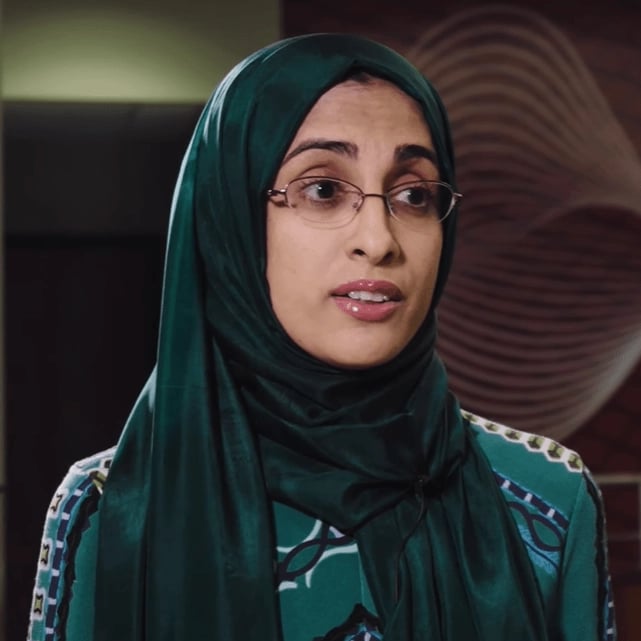
Beenish Moalla Chaudhry, PhD

Beenish Moalla Chaudhry, PhD

  • Collaborator, HCI Wing

Associate Professor

School of Computing and Informatics

University of Louisiana at Lafayette

Published at

UIST, HCII, JMIR Human Factors, JMIR Formative Research

References

  1. 1.Tomasz Miaskiewicz, Kenneth A. Kozar. (2011). Personas and user-centered design: How can personas benefit product design processes?. Design Studies, 32(5), 417–430[10.1016/j.destud.2011.03.003]
  2. 2.Lean L Kramer, Silke ter Stal, Bob C Mulder, Emely de Vet, Lex van Velsen. (2019). Developing Embodied Conversational Agents for Coaching People in a Healthy Lifestyle: Scoping Review. Journal of Medical Internet Research, 22(2), e14058[10.2196/14058]
  3. 3.Onil Bhattacharyya, Kathryn Mossman, Lovisa Gustafsson, Eric C. Schneider. (2018). Using Human-Centered Design to Build a Digital Health Advisor for Patients With Complex Needs: Persona and Prototype Development. Journal of Medical Internet Research, 21(5), e10318[10.2196/10318]
  4. 4.Marie A. Sillice, Patricia J. Morokoff, Ginette G. Ferszt, Timothy Bickmore, Beth C. Bock, Ryan Lantini, Wayne F. Velicer. (2018). Using Relational Agents to Promote Exercise and Sun Protection: Assessment of Participants’ Experiences With Two Interventions. Journal of Medical Internet Research, 20(2), e48[10.2196/jmir.7640]
  5. 5.Md Faisal Kabir, Daniel Schulman, Abu S. Abdullah. (2019). Promoting Relational Agent for Health Behavior Change in Low and Middle - Income Countries (LMICs): Issues and Approaches. Journal of Medical Systems, 43(7), 227[10.1007/s10916-019-1360-z]
  6. 6.Joni Salminen, Soon‐gyo Jung, João M. Santos, Shammur Absar Chowdhury, Bernard J. Jansen. (2020). The Effect of Experience on Persona Perceptions. , 1–9[10.1145/3334480.3382786]

Cited By

  1. 1.Beenish Moalla Chaudhry, Ashraful Islam. (2022). A Mobile Application-Based Relational Agent as a Health Professional for COVID-19 Patients: Design, Approach, and Implications. International Journal of Environmental Research and Public Health, 19(21), 13794[10.3390/ijerph192113794]
  2. 2.Ashraful Islam, Beenish Moalla Chaudhry. (2022). Design Validation of a Relational Agent by COVID-19 Patients: Mixed Methods Study. JMIR Human Factors, 10, e42740[10.2196/42740]
  3. 3.Mahmooda Khaliq, Dove Wimbish, Angela Makris. (2024). Tackling the social marketing formative research bottleneck: comparative analysis of the complementary nature of community-generated personas and focus groups. Journal of Social Marketing, 14(2), 187–209[10.1108/jsocm-06-2023-0141]
  4. 4.Ashraful Islam, Beenish Moalla Chaudhry. (2022). Acceptance Evaluation of a COVID-19 Home Health Service Delivery Relational Agent. Lecture notes of the Institute for Computer Sciences, Social Informatics and Telecommunications Engineering, 40–52[10.1007/978-3-030-99194-4_4]
  5. 5.Ashraful Islam, Beenish Moalla Chaudhry. (2022). Early Usability Evaluation of a Relational Agent for the COVID-19 Pandemic. , 1–3[10.1145/3526114.3558702]
  6. 6.Mohammad Arshad Hossain Ratul, Tunisha Yanoor Bristy, Noorjahan Sayeed, Ashraful Islam, Beenish Moalla Chaudhry. (2024). MatrikalinDiabetes: User-Centered Design of a mHealth App for Gestational Diabetes Mellitus Management and Education Among Bangladeshi Women. Lecture notes in computer science, 173–188[10.1007/978-3-031-76809-5_13]
  7. 7.Md Jahidul Hossain Mekat, Kazi Samin Nawal, Anika Tabasum, Mohammed Tasdir Ahmmed, Ashraful Islam, M. Ashraful Amin. (2026). AI-Driven Persona Generation for User-Centered Design Research: Evaluating Quality and Consistency Across Large Language Models. , 1918–1925[10.1109/icmcsi67283.2026.11412817]
  8. 8.Ashraful Islam, Beenish Moalla Chaudhry. (2022). Design Validation of a Relational Agent by COVID-19 Patients: Mixed Methods Study (Preprint). [10.2196/preprints.42740]