
Siam Tahsin Bhuiyan
- Intern, CCDS
Bachelors
Independent University, Bangladesh
Published at
Scientific Reports
Md Zafor Iqbal, Redwan Rahman, Kazi Toushia Nahar, Siam Tahsin Bhuiyan, Ashraful Islam, Saadia Binte Alam, Rashedur Rahman, Md Ashraful Amin
2025 28th International Conference on Computer and Information Technology (ICCIT)
IEEE, pp. 3282-3287

Numerous clinical applications rely on automated liver segmentation from medical images, but deep learning models' generalizability across many imaging modalities is still a major challenge. This study presents a detailed evaluation framework of U-Net-based models for liver segmentation by comparing four distinct pre-trained encoders: ResNet18, EfficientNetB3, DenseNet121, and MobileNetV2. The models were evaluated on three separate external validation datasets, which comprised both Magnetic Resonance Imaging (MRI) and Computed Tomography (CT) scans, after being trained on the LiverHccSeg (MRI) dataset. The external validation datasets were 3D-IRCADb-01 (CT), CHAOS (MRI), and SLiver07 (CT). All models showed strong results on the main MRI test set, with the DenseNet121 encoder achieving the best Dice Similarity Coefficient (DSC) of 0.928. On the other hand, the EfficientNetB3 encoder showed better generalization during external validation, with a DSC of 0.825 for CT on the 3D-IRCADb-01 dataset and 0.852 for the MRI dataset.
Bachelors
Independent University, Bangladesh
Published at
Scientific Reports
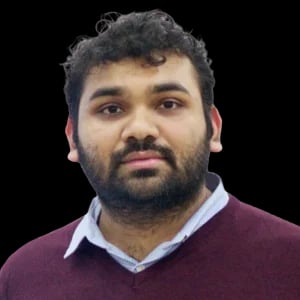
Assistant Professor
Department of Computer Science and Engineering
Independent University, Bangladesh (IUB)Published at
CHI, UIST, UbiComp, IJCNN, ICIP, HCII, ICDMW, BLP, IEEE Internet of Things Journal, JMIR, JMIR Human Factors, JMIR Formative Research, IEEE Access, Smart Agricultural Technology, Diabetes Research and Clinical Practice, PLOS ONE
Research Interests
Human-Computer Interaction, AI for Social Good, AI for Public Health, AI for Impact
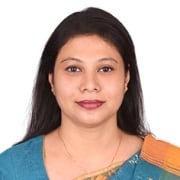
Associate Professor
Department of Computer Science and Engineering
Independent University, Bangladesh
Published at
HCII, Scientific Reports, Cognitive Computation, Neural Computing and Applications
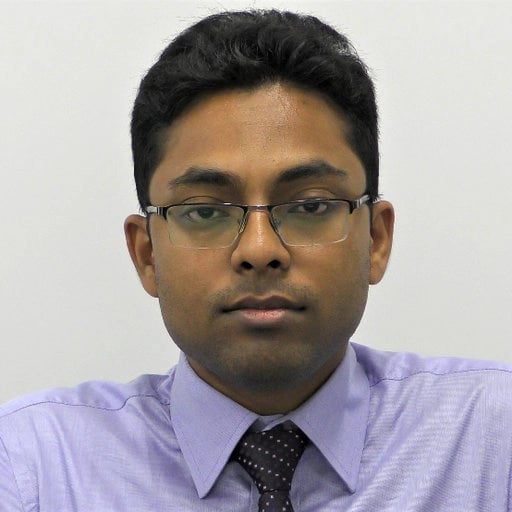
Assistant Professor
Department of Computer Science and Engineering
Independent University, Bangladesh
Published at
CHI, HCII, Scientific Reports, Cognitive Computation, Neural Computing and Applications