https://ccds.ai/wp-content/uploads/2025/07/Screenshot-2025-07-27-025113.png727945Abu Hurairah Rifathttps://ccds.ai/wp-content/uploads/2025/05/final-logo-09-1-300x109-2.pngAbu Hurairah Rifat2025-07-26 20:52:322025-08-10 18:15:31Markov Random Field
With the encouragement of Dr. Amin Ahsan Ali, we took on the task of presenting a position paper at ACM SIGCHI Winter School. Despite the tight deadline, Mohammad Ashfaq Ur Rahman and I committed ourselves to the task, with Dr. Amin Ahsan Ali providing invaluable feedback and support throughout the process. Our submission focused on “Intelligent English Tutoring System for School Students in Bangladesh” and “AI Tutor for Mathematics”, and we were overjoyed to learn of its acceptance three weeks later, Mohammad Ashfaq was awarded a 500USD travel grant. While I was not awarded a travel grant, Dr. Amin Ahsan Ali and Prof. Ashraful Amin stepped in to help secure airfare funds from CCDS and IUB, for which I am immensely grateful. Their unwavering support and guidance are a testament to the power of collaboration and perseverance in achieving our goals.
What is ACM SIGCHI winter School?
ACM SIGCHI Winter School is a highly informative program that has been specifically designed to provide a comprehensive understanding of Human-Computer Interaction (HCI) to researchers, students, and industry practitioners in South Asia. The program is an initiative of the Association for Computing Machinery’s Special Interest Group on Computer-Human Interaction (SIGCHI), a professional organization aimed at promoting HCI research and practice. The Winter School was scheduled to be held from January 2nd to 4th, 2024, at the prestigious University of Colombo, School of Computing (UCSC, Colombo). Attendees can expect to gain valuable insights and knowledge from leading experts in the field, making it a must-attend event for anyone interested in HCI.
Arrival:
January 1st, 2024
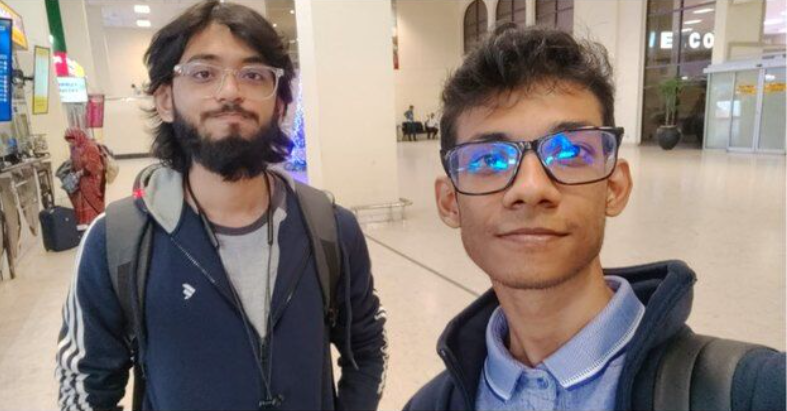
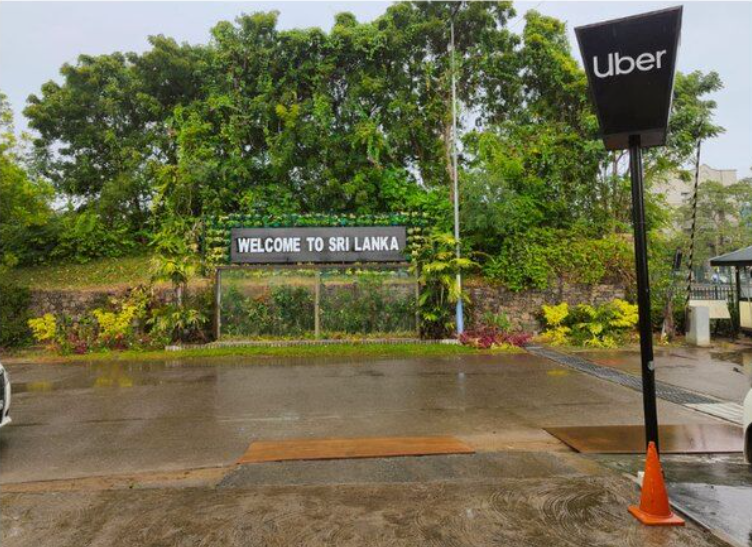
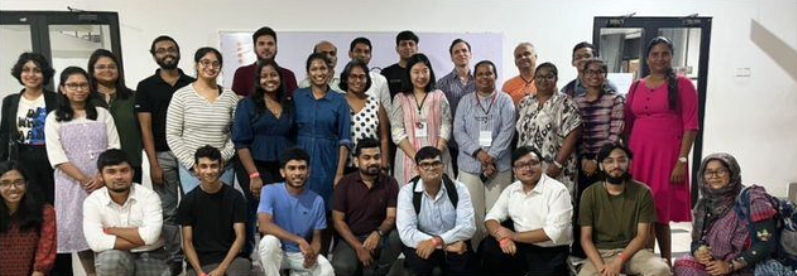
As I boarded the plane at Hazrat Shahjalal International Airport in Dhaka, Bangladesh, I felt a sense of excitement for the journey ahead. I met with Mohammad Ashfaq upon my arrival at the airport. The flight on SriLankan Airlines was smooth, and a few hours later, we landed in Colombo, Sri Lanka. We met Dr. Nova Ahmed and her students from North South University, including Manoshi Das Turjo, Nuzhat Jabeen Haque, Ashfaq Mahee Siddiky, and Farhan Ahmed Fahim, at the airport. We collected our luggage and made our way to the Hotel Clock Inn Colombo, where we would be staying for the winter school program. Upon arriving at the hotel, the organizing team from the University of Colombo School of Computing (UCSC) ACM Student Chapter warmly welcomed us. We were thrilled to meet and learn from other researchers at the event. That evening, we met Laya Jimmy, a researcher from Yellow.ai who was working on AI chatbots.
After a long day of travel, we took some time to rest before heading out for dinner. We decided to try Kottu and Nasi Goreng, local Sri Lankan dishes, from a restaurant on Abdul Hameed Street. Exploring the city with new friends was an incredible way to experience the culture. Back at the hotel, we met our roommates – two students from India’s Viswakarma Institute of Technology researching IoT-based bird nest monitoring and dark patterns. They were accompanied by their supervisor, Dr. Ganesh Bhutkar. After a full first day, we all turned in early, looking forward to kicking off the conference activities the next day.
First day of winter school
January 2nd, 2024
On Day 2, we woke up bright and early at 8 am, eager to jumpstart the workshop activities. After a quick breakfast with our fellow attendees, we were promptly greeted by the organizing student members from UCSC. Without delay, they led us to the university campus, which was stunningly landscaped with ample playground areas and a bustling cafeteria. We wasted no time in making our way to the workshops on the second floor of one of the buildings. The Winter School was kickstarted by none other than Dr. Dilrukshi Gomez. Following that, Prof. Neha Kumar from Georgia Tech provided a refreshingly insightful introduction to ACM SIGCHI and some of the best HCI conferences we were to expect. During the tea break, we took the chance to network with other attendees and learn about their work. After that, Prof. Michel Berstein from Stanford delivered a riveting lecture covering the foundations and emerging frontiers within HCI. After a mouth-watering lunch, we engaged in a conversation with Dr. Ganesh. After that, Prof. Anirudha Joshi from IIT Bombay imparted lessons on qualitative and quantitative research methods. We also participated in a tapping experiment from Dr. Anirudha Joshi’s lecture.
Second day of winter school
January 3rd, 2024
On Day 3, we picked up right where we left off with Prof. Anirudh Joshi’s teachings on paper review and proper referencing techniques. We took a short tea break to recharge before Prof. Nova Ahmed shared some insights from her research journey, which was incredibly inspiring as we prepared to present our initial project ideas.
During lunch, we took a well-deserved break before diving back into the workshops. Prof. Michael Bernstein continued to expand our knowledge of human-centered HCI and how to choose impactful research topics and methods. After another tea break, Dr. Ding Wang, Senior Researcher at Google, delivered a session that covered Prof. Neha’s topic. The valuable lessons from the day’s speakers had us bubbling with new ideas on our way back to the hotel. We were introduced to an innovative research technique by Dr. Ding Wang, known as ethnographic research. Ethnographic research design entails studying a specific group, culture, or community to gain insight into their beliefs, values, behaviors, and social dynamics. This approach employs a range of methods, including in-depth interviews, participant observation, and autoethnography. In the evening, Dr. Nova Ahmed took us on a walk to Independence Square in Colombo. It was another productive day at the Winter School that had come to an end.
Final day of winter school
January 4th, 2024
On the final day of the workshop, Professor Bernstein took our design skills for HCI research projects to the next level. Following that, Dr. Naomi Yamashita, Distinguished researcher at NTT Communication Science Laboratories, introduced mixed methods, and we were quickly formed into groups to brainstorm new ideas. We then presented our ideas to the esteemed speakers for feedback. After a satisfying lunch, Prof. Anirudha Joshi wrapped up the methods discussions. From Dr. Anirudha Joshi we learned how to write a paper effectively. Some of his tips are for writing a good paper, it is essential to select a relevant topic that presents opposing viewpoints. Diligently investigate the topic and assert your stance with compelling evidence. It is also crucial to identify the target audience for your piece. In the closing session, Prof. Bernstein shared invaluable wisdom on “unstruck-ing” projects through vectors and velocity. Dr. Michael Bernstein recommends prioritizing the audience over the conference and aiming for quality work instead of quantity. These strategies are crucial for achieving success and making a significant impact. To mark the occasion, two UCSC students performed a cultural song for everyone to enjoy.
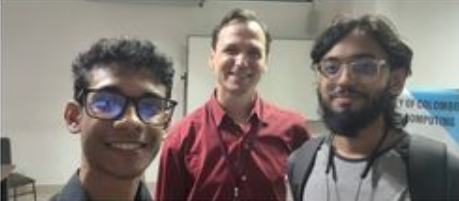
Dr. Dilrukshi gave the final remarks and expressed gratitude for the enlightening workshop. We left the event with new learnings and connections that would last a lifetime. Finally, we took a picture with Dr. Michael Bernstein.
To spend more time with our new Sri Lankan friends, we explored the arcade at Independent Square. This transformative winter school experience was the perfect way to start off the year 2024.
Leisure & Explorations
January 5th, 2024
After completing the formalities of the Winter School, we decided to take charge and explore the vibrant streets of Colombo with confidence. Despite the challenges we faced in finding a nearby mosque for Jummah Salah, we took the initiative to explore the city and had an absolutely amazing time shopping and relaxing by the sea. As the sun set over Abdul Hameed Street, we confidently enjoyed some delicious grilled food and shared hearty laughs with our newfound friends. We were thrilled to experience the warm hospitality of Sri Lanka and made the most of our trip.
January 6th, 2024
On our last day in Sri Lanka, we decided to take an adventure to Mirissa by train, a charming coastal town known for its gorgeous beaches and whale watching. We took in the stunning landscapes along the way, and every moment of our journey was magical! Once we arrived in Mirissa, we treated ourselves to a scrumptious lunch and enjoyed a stroll on the sandy beaches, enjoying the serene beauty of it all. As the sun began to set, we reluctantly said goodbye to this idyllic coastal paradise. We made our way back to Colombo by Bus, feeling grateful for the unforgettable memories that we had made.
January 7th, 2024
Departure
As the sun rose on the seventh day, we gathered our belongings and made our way to the airport, filled with bittersweet emotions as we prepared to leave the beautiful island nation of Sri Lanka—the memories we made and the experiences we shared will forever be cherished in our hearts. We feel immensely grateful for the opportunity to explore this enchanting country and form meaningful connections with the people we met along the way. As we bid farewell, we recognize that goodbyes are never easy, but we take comfort in the knowledge that our cherished memories will continue to enrich our lives for years to come.
We would like to express our sincere gratitude to CCDS for their invaluable support and mentorship throughout our project. Their guidance has been instrumental in leading us towards the winter school program. For students keen to enhance their skills in HCI and AI and wish to pursue research work in fields such as Computational Biology, Physics, and Astronomy, we highly recommend CCDS as the ideal destination and guide for your research endeavors.
In regular differentail calculus courses, one picks a function ( which can be thought of as an element of a vector space ) and they vary its argument and then see how it changes etc. This is the standard story. But there are other calculus’ too. Let us […]
https://ccds.ai/wp-content/uploads/2025/07/Screenshot-2025-07-26-193722.png324639Abu Hurairah Rifathttps://ccds.ai/wp-content/uploads/2025/05/final-logo-09-1-300x109-2.pngAbu Hurairah Rifat2025-07-26 13:36:322025-08-10 18:15:32Do Computer Scientists need to “Learn” Calculus of Variations?
Our initial goal for this project had been to implement and benchmark state of the art Reinforcement learning (RL) algorithms for the game Shologuti. However, there was no environment available for Shologuti that could be used to test RL algorithms in. Hence, our objective became to first implement a game environment for Shologuti that can easily be accessible for RL research. To make […]
https://ccds.ai/wp-content/uploads/2025/07/Screenshot-2025-07-26-152830.png5641185Abu Hurairah Rifathttps://ccds.ai/wp-content/uploads/2025/05/final-logo-09-1-300x109-2.pngAbu Hurairah Rifat2025-07-26 09:29:132025-08-10 18:15:32Creating An Open-AI Gym Like Environment For Bangladeshi Game Shologuti Using Unity 3D And MLAgents
Notes on the some of the essential Linear Algebra techniques used in data analysis are available in the link below.
Multiplication of two matrices, two vectors, and a matrix and a vector can be written in many different ways. […] Read Post
Topics include – -Orthogonal Decomposition and Least Square Regression, -Minimization of Quadratic Forms and PCA, -Singular Value Decomposition, and -Linear Discriminant Analysis.
Both Linear Algebra and Multivariable Calculus approaches are presented.
https://ccds.ai/wp-content/uploads/2025/05/final-logo-09-1-300x109-2.png00Abu Hurairah Rifathttps://ccds.ai/wp-content/uploads/2025/05/final-logo-09-1-300x109-2.pngAbu Hurairah Rifat2025-07-26 09:25:262025-08-10 18:15:33Topics in Linear Algebra for Data Analysis
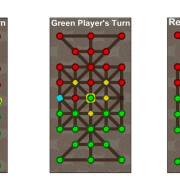
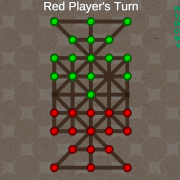
We invite you to play the web-based Sholo Guti (Bead 16) game built by our own Samin Bin Karim, an CSE undergrad from IUB and intern at AGenCy Lab. It is in its early state of development but playable.
Samin used Unity3D and RL-Agents with the aim to create a platform that could be used to train and test state-of-the art Reinforcement Learning Algorithms in an indigenous game that has almost no prior work done. The aim was to create an environment that can be accessed using python to enable easier training while also being a game playable with trained agents on multiple platforms.
Sholo Guti poses an interesting challenge to AI with a state space complexity of 10^17, which is comparable to the state space complexity 10^18 of popularly researched games like Checkers.
Firstly, Alpha-Beta MinMax search was implemented for the game in order to have a baseline against which to gauge the performance of the RL Agents and also to train RL Agents against it. Samin trained agents using two state-of-the art Reinforcement Learning Algorithms, Proximal Policy Optimization (PPO) and Soft Actor Critic (SAC). The agents were trained against MinMax opponents and against each other. The famous Open AI Five that defeated Dota 2 champions in 2019 was using an implementation of the PPO algorithm that had been adapted for training over large scale distributed systems.
After some limited training using very small networks (64 x 64), two fully connected layers, he managed to weakly solve the game. Both agents trained with PPO and SAC, managed to learn rudimentary defensive strategies for the initial phase of the game. The trained agents were able to achieve high win-rates against shallow searching Alpha Beta MinMax agents. However, MinMax Agents searching deeper still outperform this RL agent. He is working on training better RL agents.
Feel free to use them for academic purpose, if you find these useful.
NB: How models deal with uncertainty has been deliberately omitted. This topic (more specifically, Statistical ML and Probabilistic graphical models) is covered in our Machine Learning course.
https://ccds.ai/wp-content/uploads/2025/07/Screenshot-2025-07-26-150906.png6131211Abu Hurairah Rifathttps://ccds.ai/wp-content/uploads/2025/05/final-logo-09-1-300x109-2.pngAbu Hurairah Rifat2025-07-26 09:11:012025-08-10 18:15:33Introductory slides on AI (and ML) used in our introduction to AI course
Human-computer interaction and the importance of good interface design. Interface quality and methods of evaluation. Prototyping and implementation techniques. Task analysis and iterative design cycle. Dialog techniques, basic computer graphics, use of colour and sound. I/O device. Menus and their use. Command languages. Screen formatting. Natural language facilities. Case studies and project.
Course Information
Project Title
Abstract
Design of a mHealth App for Gestational Diabetes Mellitus Management and Education in Bangladeshi Women
Gestational Diabetes Mellitus (GDM) is a type of diabetes that a woman may experience during their pregnancy period. According to the World Health Organization (WHO), one out of ten pregnant women around the world tend to have GDM and may have a risk to both mother and child of having type two diabetes. Studies reported that around 35% of Bangladeshi women have GDM. For most of the women in Bangladesh GDM is unknown and its education is essential for the women who are pregnant or planning for pregnancy. Although there are some apps available online, due to language barriers it is not in the limelight, so we have designed an app which not only eliminates the language barrier but also manages and educates the women for pre and post-pregnancy GDM-related problems. Our app has features of keeping track and control of food intake, water intake, physical activity, reminder, GDM education, chat forum in social community, game. The features in the tool are HCI based which are known by usability testing, it will help pregnant women with GDM to keep a track of their health and blood glucose level and improve their lifestyle in a better way.
Stress Management mHealth Application for Healthcare Professionals in Bangladesh Stress Management mHealth Application for Healthcare Professionals in Bangladesh
This study explores the development of a usercentered mobile health (mHealth) application aimed at managing stress among healthcare professionals in Bangladesh. The objective of this study was to identify key stressors, coping strategies, challenges during managing stress, the role of technology, and users’ requirements through the survey. Then, based on the findings of the survey we conceptualized an mHealth app that addresses these challenges and help professionals to manage their stress at work. The method includes designing and disseminating a questionnaire, analyzing the data to inform the application’s features, and creating a high-fidelity prototype. The results show that high workload, patient and family pressure, and staffing shortages are major stressors while social support, taking short breaks, and time management are some of the effective strategies for coping with stress. On the other hand, participants demanded for features like guided sessions for meditation, personalized stress management plans, real-time health tracking and expressed willingness to use a smartwatch-based mHealth real-time stress monitoring app. Evaluation of the prototype demonstrated its potential effectiveness in stress management. The study concludes that such an mHealth application could significantly aid healthcare professionals in stress mitigation. We plan to improve the app further based on user feedback.
Smart Emergency Healthcare Service System Based on IOT and AI – A Model based Framework
This work presents StaySafeAI, an advanced Android application designed to enhance emergency healthcare through the integration of the Internet of Things (IoT) and Artificial Intelligence (AI). Addressing the increasing demand for home-based healthcare and the challenges faced by an aging population, StaySafeAI offers a novel approach to patient monitoring. The app leverages IoT devices like smartbands to monitor vital health parameters such as heart rate, blood pressure, and SpO2 in real time, enabling swift detection and response to health emergencies. The development of StaySafeAI involved an extensive literature review, analyzing existing IoT applications in healthcare. A detailed survey with 107 participants was conducted to understand user adaptation to smartbands, common diseases among the elderly, and challenges in emergency healthcare. The application was developed using the Rapid Iterative Testing and Evaluation (RITE) method, employing Flutter for cross-platform functionality. Google Fit and AI tools were integrated for efficient data collection and analysis. The app’s usability was tested extensively among diverse user groups to ensure reliability and ease of use. StaySafeAI demonstrated significant potential as an emergency healthcare tool. It successfully detected abnormal health patterns, automatically shared the patient’s location, and alerted emergency contacts, ensuring a rapid medical response. The usability tests yielded positive results, confirming the app’s effectiveness, ease of use, and user satisfaction. Despite limitations in expert feedback due to external factors, StaySafeAI’s positive reception by users underscores its potential impact in transforming emergency healthcare through smart technology integration.
A Comprehensive Analysis on Nutritional Awareness in Bangladesh and a Proposal of a Mobile Application for Better Health Choices
Eating healthy is important, but it is not enough. It is also important to consume the necessary nutrients that our body needs. Nutrients are essential for growth, repair, and the proper functioning of all bodily systems. In this study we conduct a survey to understand the views and practices among Bangladeshis. Understanding the user needs and mobile app benefits we are proposing a simple solution for the people of Bangladesh. Just simply providing physiological information allows users to know their nutritional needs and make grocery choices accordingly. Among 72 participants 75% wanted this kind of solution and among 10 testers all of them liked using our system.
ShoroSonket: A Vision Transformer based Bengali Sign Language Interpreter
Effective communication is a fundamental human right, yet hearing-impaired individuals often face significant challenges in their interactions with the non-sign language using population. In this context, we present a novel web app that leverages state-of-the-art machine learning techniques to interpret Bengali sign language gestures into text, bridging the communication gap between sign language users and non-sign language users. Our approach employs a Vision Transformer (ViT) model, trained on a comprehensive dataset, to accurately capture the spatial and temporal intricacies of sign language gestures. The model achieves an impressive accuracy of 97.41%, with high precision, recall, and F1-Score, making it proficient in real-time sign language interpretation. The web app’s usability was validated through extensive testing, resulting in an average System Usability Scale (SUS) score of 82.5, signifying strong user satisfaction and ease of use. Participants praised its user friendliness, ease of learning, and integration of functions. This initiative not only improves communication for the hearing impaired but also promotes accessibility and inclusivity in society. In future work, we aim to expand our model’s capabilities to encompass various sign language dialects. Our project exemplifies the potential of technology to empower and enrich the lives of individuals with hearing impairments by providing them with a powerful tool for effective communication.
ShashthyoShongi: Healthcare Assistance with Emergency Services for Bangladehsi Citizens
This study explores the entire process of creating, assessing, and analyzing the “Shashthyoshongi” healthcare app, including user experience, usability, and correlation analyses. The study employs usability testing scales like SUS, MAUQ and UEQ to give a better understanding of user experience. The methods measure user happiness, app reliability, and preferences using established scales, statistical methods, and online questionnaires. Features that are focused on the user, such as tracking health information, emergency services, and appointment scheduling, are demonstrated in the prototype. Usability evaluations highlight areas of strength and improvement. The result of the study gives positive feedback on user experience. The study ends with flexible suggestions for improving the app and considering possible effects in medical emergencies. Index Terms—Healthcare, Emergency, Services,
Design Validation of a Complete Dengue Assistance Web App in Bangla
In recent times, dengue fever has become a significant public health concern in Bangladesh and is causing a substantial burden on healthcare systems and society. Our project aims to create a user-centered virtual conversational Agent-Based dengue dashboard, helping users in Bangladesh access accurate information, symptom tracking, and guidance during dengue outbreaks. Our main objective is to create a user-friendly virtual platform with an AI-driven chatbot to help educate and guide dengue patients and caregivers in Bangladesh. We also need to design the platform with a focus on the user’s needs to make it effective and easy to use, and we also need to continuously gather user feedback and make improvements to the system through iterative evaluations. The user-centered approach being used in this project is intended to solve the dengue problem in Dhaka. User personas facilitate the development of chatbot interfaces and virtual dashboards by integrating a range of viewpoints obtained from focus groups, interviews, and surveys. An effective and culturally appropriate set of tools is the goal of the iterative design process, which is guided by user input and health data. Encouraging preventive and health monitoring, the chatbot uses strong natural language processing (NLP) technology to deliver individualized information and help. Tests conducted in the actual world will be used to gauge the project’s efficacy and cultural fit. The project’s objective is to empower people in Bangladesh to prevent dengue by working together with stakeholders and adhering to ethical principles such as user data privacy and accessibility
Maternity and Infant Care Application with Language Flexibility for Bangladeshi Mothers
With the advancement of technology, there is a growing need for accessible and user-friendly applications that can provide antenatal and postpartum care guidance. However, many existing solutions are costly and lack the feasibility of receiving care when needed. To address these challenges, we have developed “GorbhoKotha” a mobile application prototype designed to provide accurate and reliable information during pregnancy and infant care in Bangladesh. The application features include a chatbot capable of responding to users’ inquiries, along with carefully selected articles on maintaining good health during pregnancy and caring for newborns. The application also includes functionalities such as searching for nearby pharmacies and hospitals, managing symptoms and diseases, and emergency management for children. To guarantee the usability and inclusivity of our application, we have included concepts of Human-Computer Interaction (HCI) in our design process. Our application takes a human-centered approach, prioritizing the needs and preferences of our users to create a solution that is both effective and accessible.
An introduction to the basic principles, techniques, and applications of Artificial Intelligence. Coverage includes perception and learning, searching and logical inference and knowledge base. Methods used in this course will have wide applications in different artificial intelligent systems such as expert system, robotics, computer vision, and natural language processing. Students will have practical experience in designing and implementing components of an intelligent system.
Hill Climbing, Simulated Annealing, Genetic algorithms, Swarm intelligence – Particle Swarms, Ant Colony Optimization
3
Logical Reasoning
Propositional logic, Reasoning – Forward and Backward Chaining, *First order Logic and Reasoning
2
Optimization
Review of Linear Algebra and Calculus for Multivalued Functions. Optimization of multivariable functions, Directional Derivatives, Gradient, Hessian, Gradient-based Optimization, Numerical Differentiation
3
Machine Learning I
Supervised learning, Regression, Classification methods – formulation of Linear Regression, Logistic regression, Linear classifiers
3
Machine Learning II
Neural Networks, Backpropagation, Regression and Multiclass Classification, Training of Neural Networks